Gallbladder removal
Gallbladder removal with our specialist surgeons across the UK
- Avoid the NHS waiting list
- Free consultation within 24hrs
- Surgery within 1-2 weeks
- Day case surgery, home same day
- Self pay, finance options available

Gallbladder removal with our specialist surgeons across the UK
A laparoscopic (keyhole) Cholecystectomy involves the surgical removal of the gallbladder. This is usually recommended when gallstones have formed and are causing health complications. For most people this presents as severe abdominal pain, quite often coming in waves and usually worse after a meal or in the evenings.
Gallstones are very common but this means that NHS waiting lists are very long and it can take years to be listed for surgery. With a self-pay removal, you could be pain-free in just a few weeks.
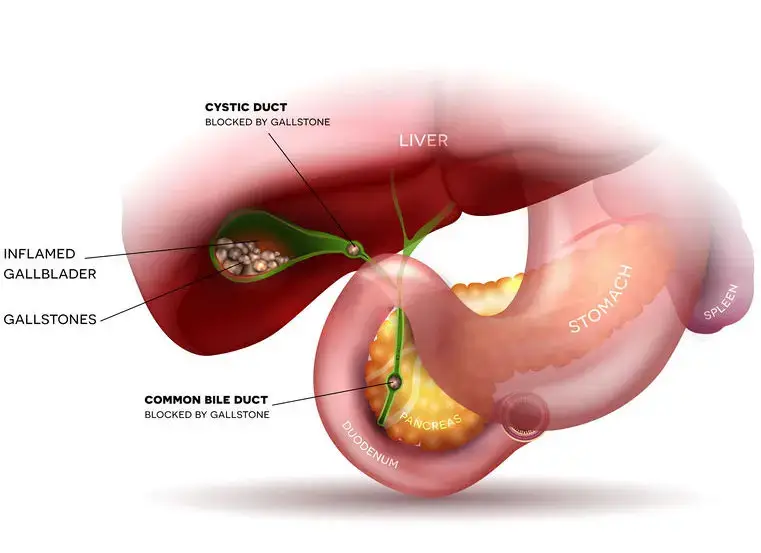
The most important point to make is that the gallbladder is not an essential organ and you can expect to live a normal life once it has been removed.
Gallbladder removal is usually undertaken laparoscopically (keyhole) but there are a minority of cases that need to be done as open procedures. An open procedure would only usually be necessary when the gallbladder is found to be very inflamed. With our surgeons over 99% of cases are successfully completed laparoscopically. The benefit of this is that you can usually go home the same day and expect a swift recovery. Most people are able to go back to work in 4 or 5 days assuming their work is not too strenuous.
With the keyhole surgical technique, the surgeon will make 4 small horizontal incisions in the abdomen through which the laparoscope and instruments required to do the procedure are passed.
The procedure is performed under general anaesthetic and takes approx. 30-60 minutes in theatre. Due to this, we have an upper age limit of 70.

Professor Singhal is Medical Director at Healthier Weight and one of our world-class surgeons specialising in gastro-surgery. He performs various laparoscopic and open bariatric surgical procedures including Cholecystectomy, the clinical name for gallbladder removal.
Gallstones are small ‘stones’ that form in the gallbladder. They are quite common. Some people have gallstones and are without symptoms but for others they result in frequent flare-ups of abdominal pain.
It’s impossible to predict who will get gallstones but we know that they are more common as we get older and among people who follow a diet that is rich in fat. They are also more likely to occur in people who have lost weight rapidly. People who have had weight loss surgery such as gastric sleeve and gastric bypass are more prone to gallstones in the years after surgery.
There are few treatment options for patients with symptomatic gallstones. You can change to a low fat diet but this is unlikely to help much in the more severe cases and in the longer term.
Contrary to treatment for kidney stones, it is not possible to effectively dissolve gall stones or shatter them into small pieces using shock waves, and antibiotics are only used to treat infections of the gallbladder.
Thus the usual treatment for patients with symptomatic gallstones is keyhole removal of the gallbladder.
The primary benefit of surgery is that you should be free of pain and able to eat a normal diet. Surgery should also prevent the longer term complications associated with untreated gallstones.
There are complications associated with all types of surgery and complications associated specifically with cholecystectomy. These complications are listed below. When we meet for consultation we will talk about these, incidence rates and how they might affect you.
Although it may appear a long list, laparoscopic cholecystectomy is proven to be a very safe procedure so incidence rates for these complications are very low.
Cholecystectomy specific complications
Unless we agree otherwise beforehand, we expect patients to go home the same day.
We expect you to be able to return to light work in 4-7 days. It’s important that your work isn’t strenuous. We encourage exercise to accelerate your recovery but you shouldn’t do this too soon.
We will send a copy of your discharge letter to your GP so that they are fully informed and able to support your recovery. We will also provide you with instructions upon discharge about the diet to follow in the weeks ahead, any medication that has been prescribed or is needed and exercise. It is important for you to read these notes carefully and follow them. Of course we are here to support that process too.
Complete the form below to receive your free personalised quote today.